Anirban GHOSH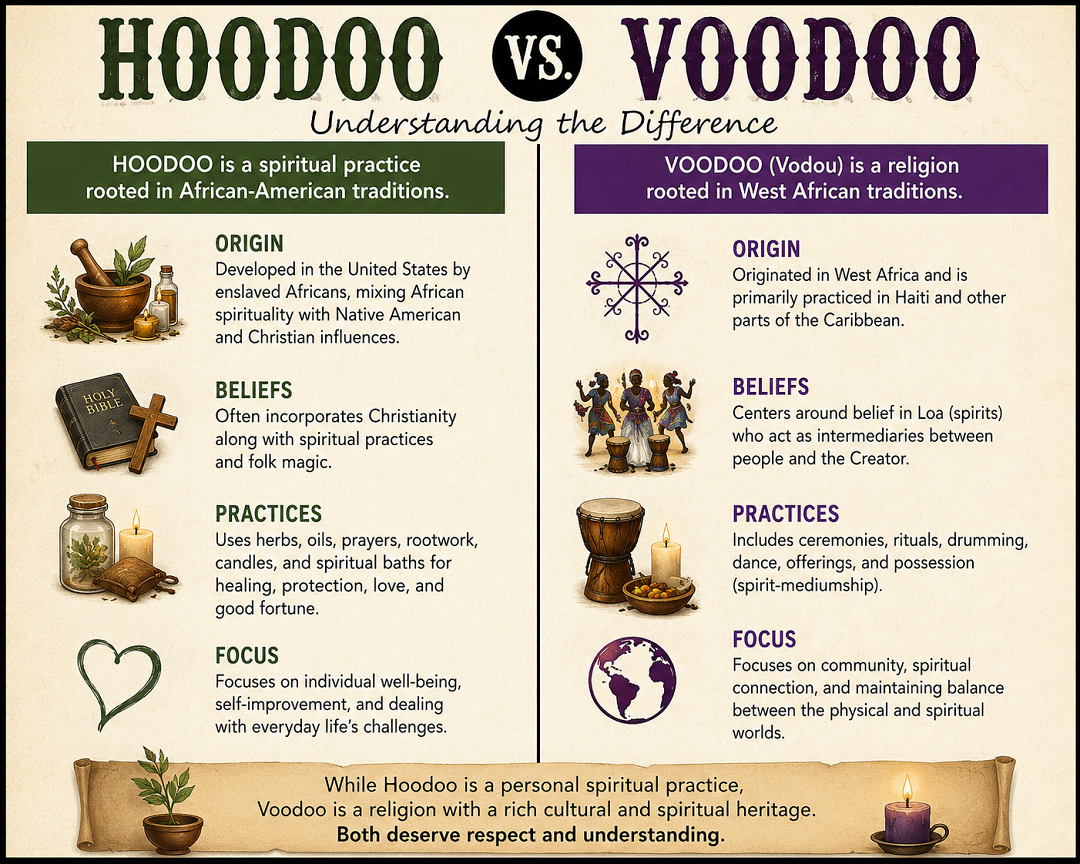
Hoodoo vs. Voodoo: The History and Reality of These Spiritual Traditions
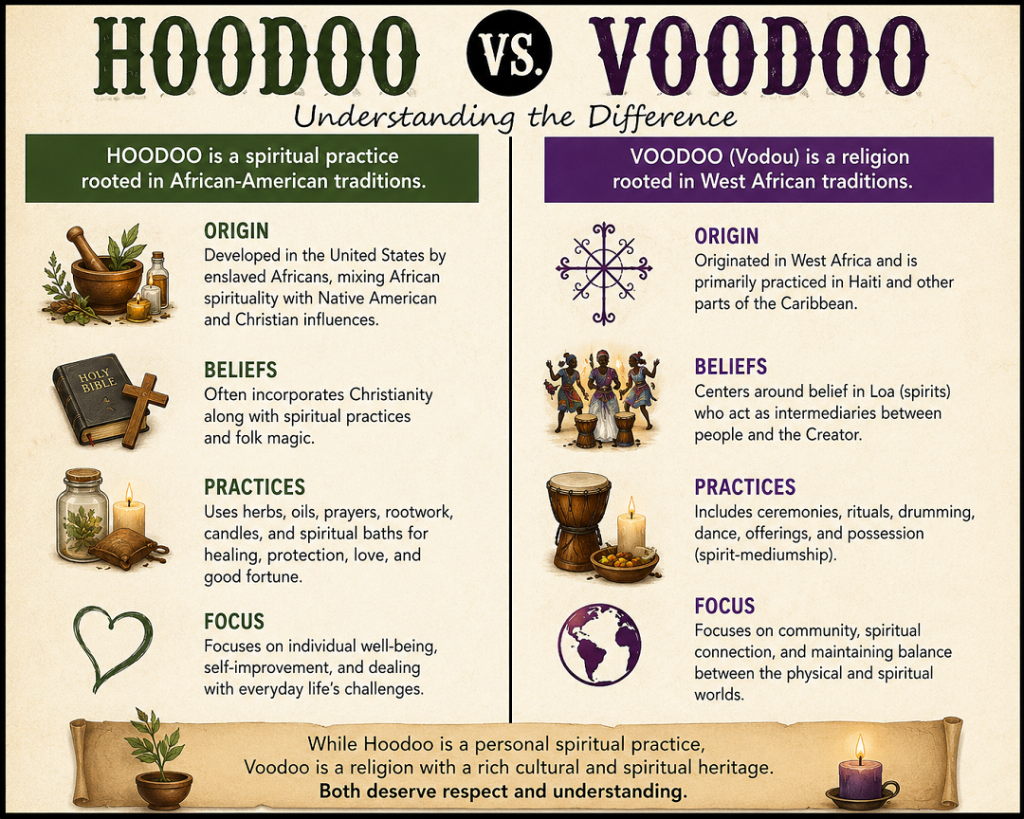
Movies often show people sticking pins in dolls and calling it Voodoo. You might also see a bag of herbs on a doorstep and hear it called Hoodoo. Most people confuse the two, assuming they are the same practice. In reality, they are two very different paths with separate origins and purposes. One is a system of folk magic, while the other is a structured religion. Knowing the difference is key to understanding the richness of African Diasporic traditions.
These traditions belong to a group of beliefs known as African Diasporic Religions. They grew from West African spiritual practices that traveled across the Atlantic with enslaved people. Under the harsh conditions of slavery, these customs had to adapt and survive in secret. They blended with local beliefs, leading to the distinct traditions we see today.
Tracing Ancestral Spiritualities
To understand why these paths exist, we must look back at their shared origins. Both traditions share a heavy reliance on ancestral connections and the forces of nature.
West African Religious Foundations
West African societies hold deep respect for a supreme creator who is distant from daily human affairs. Instead, people focus on intermediary spirits who interact with the physical world. These spirits go by names like Vodun or Orishas, depending on the specific region. Ancestors play a huge role in these systems. They act as guides and protectors for the living. The idea that life force or energy flows through all things, from trees to rivers, is central to these beliefs. This energy can be directed or influenced, which forms the basis for spiritual practice.
The Impact of the Transatlantic Slave Trade
The slave trade forced millions of people from their homes. These individuals brought their spiritual knowledge with them, even when slaveholders banned their native customs. To keep their faith alive, they began to blend their traditions with new elements. In some areas, they matched their spirits with Catholic saints to hide their practices. This was a survival strategy. While they were forced to adopt new rules, the core of their original spiritual identity remained hidden. This is where the divergence between Hoodoo and Voodoo begins.
Hoodoo’s Spiritual Toolkit and Purpose
Hoodoo is not an organized religion. Instead, it is a form of folk magic that people use to change their own lives. It is pragmatic, hands-on, and personal.
Defining Hoodoo: A Conjuring Tradition
Hoodoo functions as a system of conjure. It is a collection of beliefs and practices meant to help someone gain power, find luck, or solve a specific problem. Because it is folk magic, it does not have a central church, a set of scriptures, or a priesthood. It is highly syncretic, meaning it pulls from many sources. A practitioner might use Bible psalms, African herb knowledge, and European lucky charms all in one working. It exists to solve issues like money troubles, bad luck, or relationship problems.
Core Elements and Practices
Practitioners use physical objects to direct spiritual energy. These objects are often called curios. You might see candles, roots, oils, and powders used to build a result. For example, a person might create a spiritual bath to wash away bad energy after a stressful week. They might also carry a mojo bag, which is a small cloth sack filled with roots and herbs, to attract luck. These practices focus on the individual’s needs and goals. They are about creating a tangible change in one’s life.
The Role of the Spiritualist and Rootworker
In Hoodoo, someone who specializes in these practices is often called a rootworker. They are skilled in the properties of roots, plants, and other items. People go to a rootworker when they need help fixing a problem they cannot handle alone. The rootworker acts as an advisor and a preparer of spiritual goods. They hold a unique place in their community as healers and problem-solvers. They are not priests, but they are trusted figures who understand how to work with the natural world to get results.
The Structure and Worship of Voodoo
Voodoo is a formal, organized religion. It has a clear structure, a pantheon of spirits, and a communal life. It is not just about magic; it is about service to the divine.
Voodoo as a Formal Religion
Voodoo, especially in its Haitian and Louisiana forms, operates with a hierarchy. It has clergy who guide the community and perform rituals. There are specific rules for how to honor the spirits and how to live a spiritual life. It is not something you do in secret to fix your own luck. It is a way of life that involves community participation. You belong to a group, attend services, and contribute to the health of the spiritual community.
The Pantheon: Lwa and Ancestors
At the center of Voodoo are the Lwa. These are powerful spirits who govern different aspects of human life. In Haitian Vodou, practitioners view the Lwa as family members who need care, food, and respect. They are distinct from God but act as messengers and helpers. You might hear about Papa Legba, who opens the gates between the human and spirit worlds, or Erzulie Freda, who represents love and beauty. These spirits are not saints, even though they were sometimes syncretized with saints to protect the religion from slave owners.
Rituals, Ceremonies, and Community Worship
Voodoo ceremonies are vibrant and communal. They often include drumming, dancing, and singing. The goal is to create an atmosphere where the Lwa can manifest. During these rituals, a practitioner might become possessed by a Lwa, allowing the spirit to speak or dance through them. These events happen in a sacred space called a peristyle. A Houngan (priest) or Mambo (priestess) leads these ceremonies. They have the training to ensure the spirits are honored correctly and that the community remains balanced.
Separating the Threads: Similarities and Differences
Confusion happens because the words are used loosely in pop culture. However, the differences are clear when you look at the goals and structures of each.
Religion vs. Folk Magic
The biggest difference is the structure. Voodoo is a religion with a pantheon of spirits, a priesthood, and communal worship. It is about devotion and relationship with the divine. Hoodoo is a system of folk magic. It is about personal agency and solving problems. You do not go to a church to do Hoodoo. You do not worship the spirits in the same way you do in Voodoo. One is a way to serve the divine; the other is a way to use spiritual energy for yourself.
Geographic and Cultural Evolution
Geography played a large role in how these traditions split. Hoodoo grew mostly in the Southern United States among enslaved people who had to work in isolation. It remained a quiet, home-based practice. Voodoo, specifically Haitian Vodou and Louisiana Voodoo, grew in environments where the community could gather more openly at times. These traditions held onto more of their original West African structure, complete with organized hierarchies and public rituals.
Misconceptions and Stereotypes
Media has been unkind to both traditions. Horror movies often paint Voodoo as evil or obsessed with harm, which is a harmful lie. This is a common trope used to make the religion seem scary. Similarly, people often think of Hoodoo as just “black magic” or “voodoo dolls.” These stereotypes erase the healing, protective, and cultural history of these systems. Both traditions focus heavily on life, protection, and ancestors rather than the dark themes often seen in films.
Contemporary Relevance and Respectful Engagement
These practices are not relics of the past. They are living, changing traditions that still hold meaning for many today.
Modern Practitioners and Communities
In the 21st century, both Hoodoo and Voodoo are thriving. Technology allows people to connect across large distances. There are online shops where you can buy traditional roots and oils, and there are digital forums where people share knowledge. However, this growth also brings challenges. It is easy to find incorrect information online. People who are interested in these paths need to take care to find authentic sources rather than relying on social media trends.
Tips for Respectful Learning and Interaction
If you want to learn more, start with respect. Do not treat these traditions as an aesthetic or a fun hobby. Understand that these are the survivors of extreme oppression. If you buy items from a practitioner, be sure you understand the context of what you are using. Avoid cultural appropriation by learning the history and honoring the people who kept these traditions alive. When in doubt, listen more than you speak. These paths deserve the same respect you would give to any other spiritual tradition.
Final Thoughts
The distinction between Hoodoo and Voodoo is important for anyone who wants to understand these traditions. Hoodoo is a practical system of magic meant to help you handle the challenges of daily life. Voodoo is a formal religion centered on the relationship between humans and the spirits. Both are powerful legacies of resilience, created by people who refused to lose their spiritual identity. By stripping away the movie stereotypes, we can see these practices for what they are: vital parts of the African Diasporic experience. Understanding them requires research, patience, and a genuine respect for their history.